Offshore wind farms across Europe and Asia now face conditions that change faster than design standards can track. Research from the Southern University of Science and Technology in China shows that extreme winds are becoming more frequent, pushing turbines beyond their design limits.
A shrinking buffer between design and reality
According to the study, wind speeds are rising along more than 60 percent of the world’s coastlines. Nearly one in five coastal areas already experiences winds that exceed the threshold for Class III turbines. Each turbine class includes a safety margin to absorb rare gusts without damage: Class III turbines are built for winds up to 37.5 m/s, Class II for 42.5 m/s, and Class I for 50 m/s. The researchers found that as storms intensify, those margins are disappearing, increasing mechanical strain, especially in older turbines built on outdated climate data.
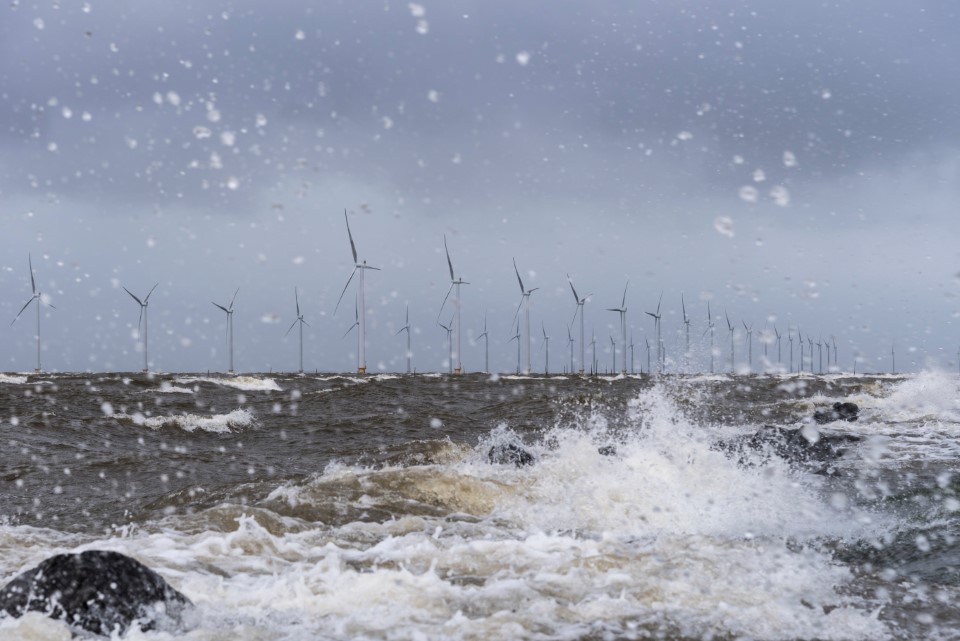
The study also highlights that some of the most exposed wind farms lie off south-east England, the German coast, Denmark, the Netherlands, Belgium, and Sweden. Even small increases in wind speed can sharply raise stress on key components.
At higher altitudes, the research shows that risks rise further. At 200 m hub height, more than half of offshore sites exceed the Class III limit, compared with one-third at 80 m. The chance of Class I-level extremes increases more than tenfold between 100 and 200 m, meaning newer, taller turbines face far greater exposure.
Warning signs from the field
In 2024, Typhoon Yagi damaged six turbines near Hainan, China, one of the worst weather-related failures on record. Extreme winds now cause more than half of all turbine breakdowns. Even when turbines remain operational, the added strain accelerates wear, shortens lifespans, and increases unplanned shutdowns.
Resilience will define the next generation of wind farms
The offshore wind industry is beginning to adapt, using longer climate records, stronger structures in high-risk zones, and updated project standards. Many developers are exploring higher design classes and upgrading components to meet evolving conditions.
Part of that progress comes from materials innovation. Bearings such as SKF’s DuraPro series, available for both wind turbine gearboxes and main shafts, are engineered to handle higher dynamic loads and maintain reliability under variable winds.
Such advances, combined with better forecasting and planning, will help offshore turbines remain efficient and resilient in the decades ahead.