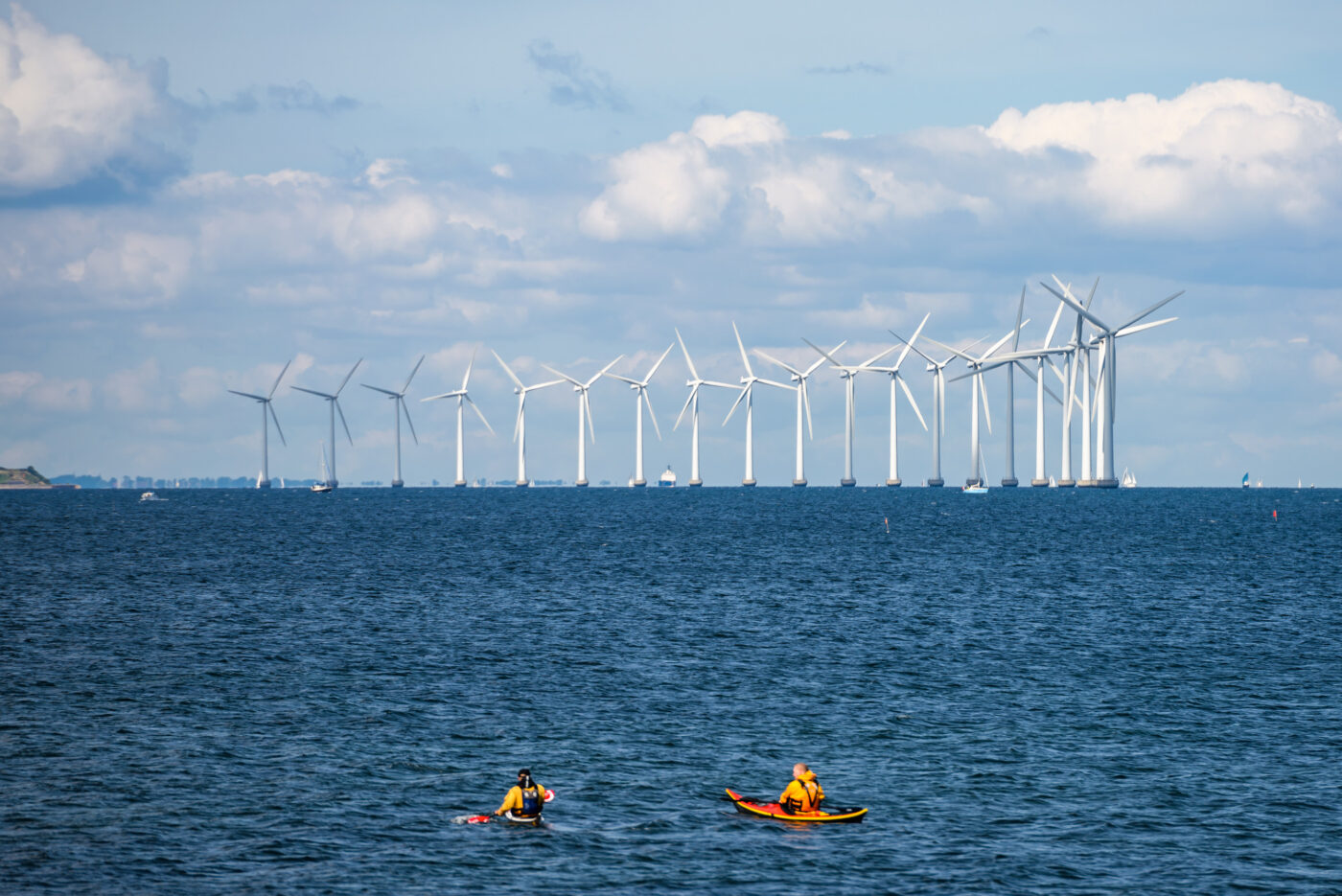
Looking ahead, 2026 is shaping up to be a strong year for offshore wind in Europe. Several major developments are set to either break ground or reach final commissioning, with more than 6 GW of new capacity in the pipeline. While challenges around permitting, grid access, and logistics remain, key projects are advancing in Germany, the UK, the Netherlands, Estonia, and Latvia.
Germany ramps up offshore wind with He Dreiht and Nordlicht
He Dreiht, a 960 MW offshore wind farm developed by EnBW, is currently under construction north-west of the island of Borkum. It is one of the first large-scale offshore projects in Europe to proceed without government subsidies, highlighting growing confidence in the economics of wind power. The turbines are expected to be fully European-made, supporting regional supply chains. Commissioning is planned for spring 2026. Once operational, it is expected to supply electricity to around 1.1 million homes.
Further along the coast, another major development is nearing construction. Nordlicht 1 and 2, a pair of neighbouring offshore wind farms from Vattenfall, are planned in the same part of the German North Sea. Together, they will contribute about 1.6 GW of capacity. The final investment decision was made in 2025, with work set to begin next year. The two sites are expected to generate roughly 6 TWh of electricity annually, enough to power more than 1.6 million homes. The project is designed to connect with Germany’s expanding offshore grid and future hydrogen infrastructure. According to the developer, it will be the largest offshore wind project ever built in the country.
East Anglia Three pushes forward
East Anglia THREE, a 1.4 GW project developed by ScottishPower Renewables, is currently progressing off the Suffolk coast. It is part of the wider East Anglia Hub, a group of linked projects sharing infrastructure to reduce costs and streamline delivery. The wind farm reached financial close in 2023 and is expected to begin operations in the fourth quarter of 2026. Once fully commissioned, it will supply power to more than 1.3 million homes and contribute to the UK’s goal of reaching 50 GW of offshore wind by 2030.
OranjeWind leads innovation in Dutch offshore rollout
OranjeWind, formerly known as Hollandse Kust West VII, is a 795 MW offshore wind farm planned in the Dutch North Sea, about 53 kilometres off the coast near IJmuiden. Construction is expected to begin in 2026, with full operation scheduled for early 2028. The site will produce enough electricity to supply approximately one million Dutch households. What sets OranjeWind apart is its focus on system integration. The project will combine offshore wind with technologies such as floating solar, battery storage, and green hydrogen production to help balance supply and demand across the grid. It forms part of the Netherlands’ wider strategy to reach 21 GW of offshore wind capacity by 2030.
Baltic collaboration gains ground with ELWIND
ELWIND is a joint offshore wind and grid interconnection project between Estonia and Latvia, planned in the Baltic Sea with a capacity of up to 1 GW. Preparations are already under way, and construction rights are expected to be auctioned in 2026. The project will combine large-scale generation with a shared grid connection designed to deliver power to both countries. Full commissioning is expected in the early 2030s, but the upcoming tender marks a key step for offshore development in the eastern Baltic. Feasibility studies suggest the site could produce around 3 TWh of electricity per year — enough to meet roughly one-fifth of the combined demand of Estonia and Latvia.
What this means
After years of planning and policy work, offshore wind in Europe is entering a new phase of delivery. The projects advancing in 2026 benefit from closer coordination between financing, permitting, and grid access. While some delays continue, the outlook is improving. This growing pipeline reflects stronger confidence in the sector’s ability to scale. It also points to steady momentum toward meeting the EU’s 2030 renewable energy targets. What happens in 2026 will help define how quickly offshore wind can expand across Europe in the years ahead.